

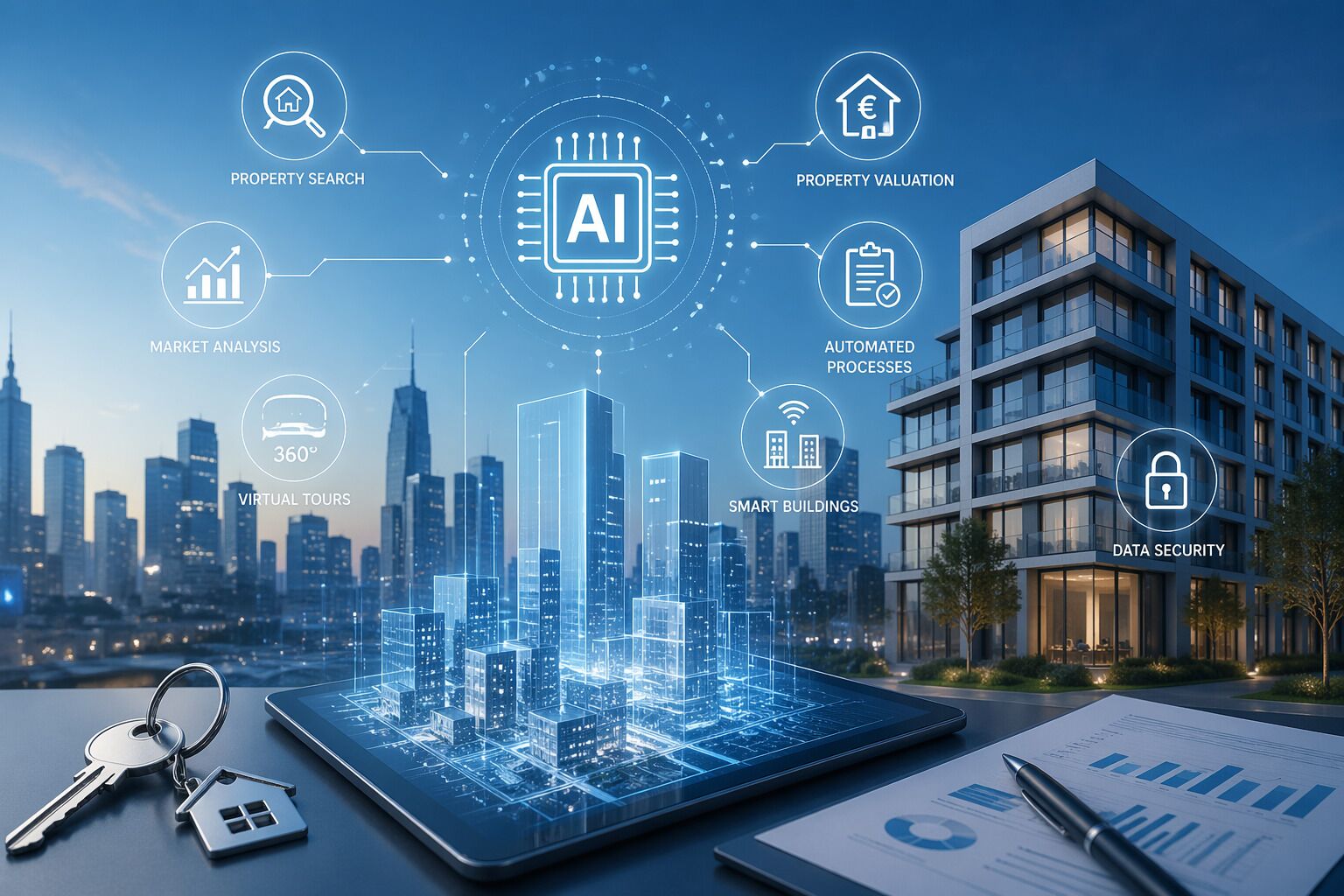
Digitalisation and AI in the real estate industry

Artificial intelligence in real estate valuation

The valuation of real estate has long been a complex, often subjective process. AI-based models fundamentally change this. By analysing large amounts of data - such as location, market trends, comparison objects and socio-economic factors - more precise and faster assessments can be created.

This not only increases transparency, but also reduces risks in purchasing decisions. Investors benefit from data-based forecasts, while banks can make more informed financing decisions.

Automation of processes

Another central advantage of digitalisation is automation. Today, administrative tasks such as rental settlements, contract management or appointment arrangements can largely be handled digitally.

AI-powered systems take over routine tasks, saving time and cost. At the same time, the susceptibility to errors decreases and processes become more efficient.

Smart buildings and data-driven administration

Modern buildings are becoming increasingly “smart”. Sensors record data on energy consumption, utilisation and maintenance requirements. AI analyses this data and optimises operation - for example through intelligent heating control or predictive maintenance.

This reduces operating costs, increases sustainability and increases the value of the property in the long term.